
Protest Pro-tips
By Erik Shelley, Direct Action Coordinator, Michigan United
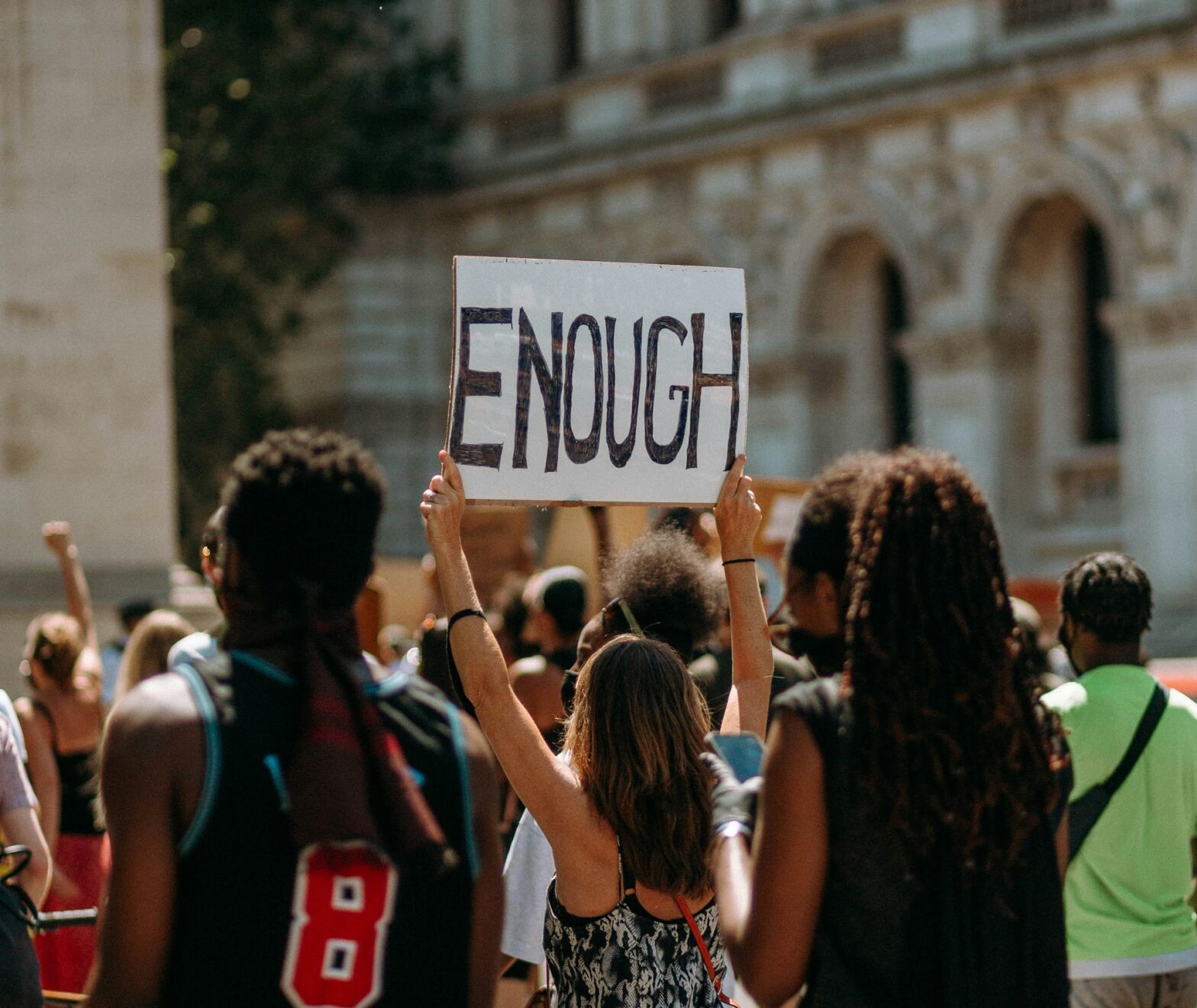
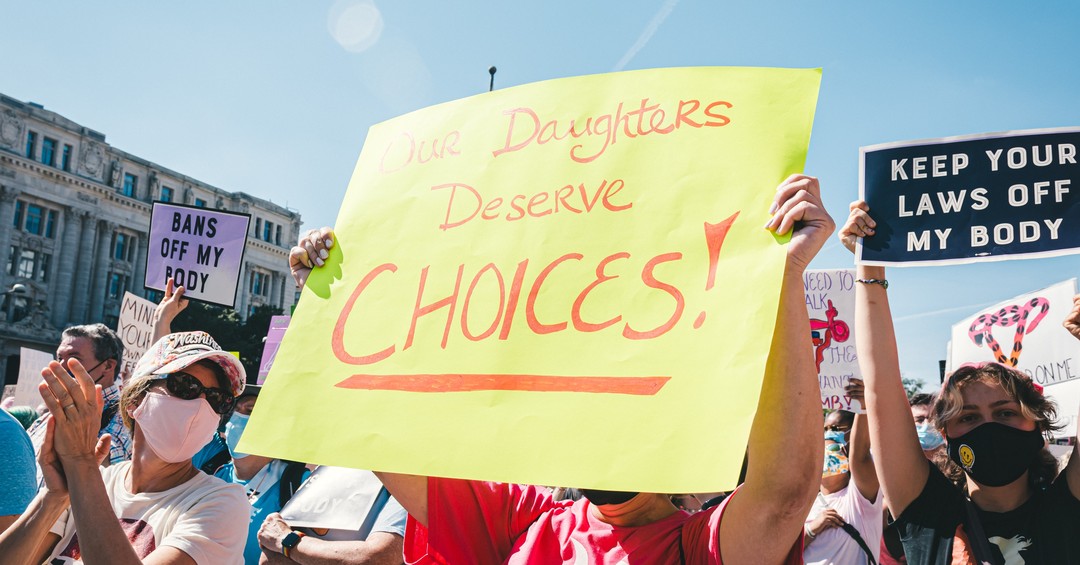
In the days when I became acquainted with Michigan United (long before we were even known as Michigan United), I was engaged in the Occupy movement. Besides a protest against economic inequality and the many ways in which it manifested, it was also a stand in defense of free speech. As with many other successful movements, it enabled mass participation. No one had to tell you what to do, wherever you were. It was apparent. Make a sign stating your demand, go to a public space, and stay there as long as you could. The space could be a park, an intersection, a long forgotten city square. These spaces are also known as “The Commons.”
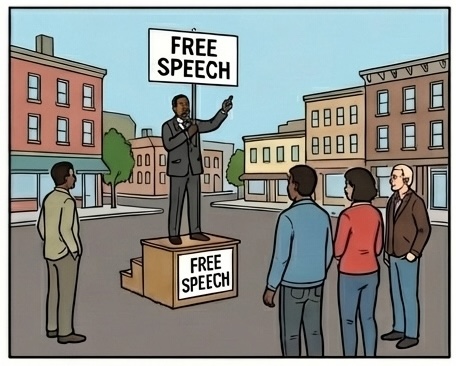
In our everyday lives, we may move from public space to private ones without noticing. For the sake of protest, these distinctions are important; the freedom to say what you believe means nothing if no one can hear you. If you can’t turn over a soap box on a street corner, stand on it, and rail against the government, you don’t truly have free speech. It may seem like an odd place to draw a line, but if we can no longer speak our minds on a city sidewalk, we are in a very dark place indeed.
Our right to The Commons has restrictions. The basic rule to remember is that you can’t prevent others from using them. In other words, if you form a picket line on the sidewalk in front of a store, everyone has to keep moving in order to allow others to pass. If your protest has drawn the ire of police, they will likely do something worse than arrest: They may issue tickets for things like loitering and impeding traffic, nothing worth bragging about Monday morning. It’s best just to keep moving.
In metropolitan areas, sidewalks that were once limited to the common marketplace now wander off into unexpected areas. When a crosswalk passes the median of a divided highway, is that stretch a public sidewalk? What about the rest of the grassy area? It depends on the circumstances and the officers enforcing it. If the Woodward Cruise is going on, you can take a folding chair and a cooler out there all day. If it’s rush hour in Southfield and you’re trying to stop the president from torturing people, not so much. (Don’t ask me how I know, just trust me on this one).
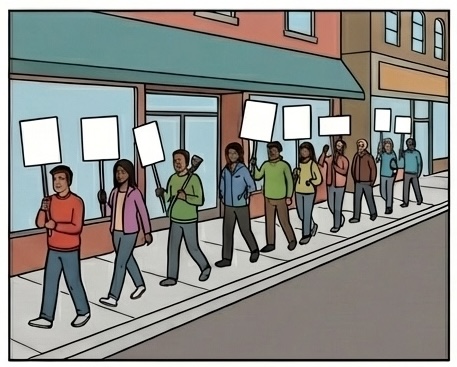
Sometimes, the sidewalk was already there when the freeway came through, as was the case of the Orangelawn footbridge that spans the I-96 freeway entering Detroit. It spans a dozen or so lanes for over 500 feet, making an elementary school available by foot to children on the other side. Overpasses like this offer high visibility, especially during rush hour, but there are some rules you should follow: Don’t attach a sign to the bridge itself, but you can press a sign against the chain link fence covering it. Don’t hang signs on the outside of that fence. Although this might improve visibility, it also runs the risk of your sign flying off into traffic and causing an accident that will overshadow your protest.
Not surprisingly, The Commons are a vanishing resource. Campus Martius Park, which sits at the city center, is billed as “Detroit’s gathering place,” but if you try to exercise your right to speak with people there, a private security guard will quickly remind you that while it is a public space, it is privately managed. Smaller towns that once had a city square surrounded by shops now have shopping malls off a freeway without even a hint of a sidewalk.
Private entities have taken over public spaces, so they rely on the public coming into their private spaces. Businesses and government offices have public facing locations that are ripe for being taken over themselves. A crowd of people can chant all day on a sidewalk in front of a store or they can take their action indoors to its cash registers. A flash mob can be an escalation of the outside action or a grand finale when it’s ready to wrap up.
Expect security guards to give orders they are not able to enforce. They can detain you if merchandise has been stolen or property damaged, but they really want you out of their store as quickly as possible. When police arrive, follow their orders without hesitation because they have the power to effect arrests and issue fines. (Although really, they’d prefer to get back in their cars and go rather than fill out reports all day).
A well crafted action need not even involve law enforcement. I am jealous that I didn’t think of one that targeted Home Depot for their cooperation with Immigration and Customs Enforcement (ICE) as they arrested and deported some of their best customers. Activists purchased .37 ice scrapers, got in line, and slowly paid for them before returning them to customer service with a lengthy explanation. The action was perfectly legal, yet it disrupted the status quo. In fact, there’s no reason you couldn’t go to Home Depot today to purchase and return an ice scraper.
This brings us to the next level of protest, civil disobedience.
If you decide to walk in the middle of the street by yourself, it won’t take long for the police to give you a ticket for jaywalking. But if you and 5,000 of your closest friends take to the street, oftentimes police will block off intersections and give you an escort. There are variables, of course. Suburban police may not see this sort of action as often as city police. If you are protesting the police themselves, they may have a shorter temper. Generally speaking, there are several steps between seeing a mob and making arrests.
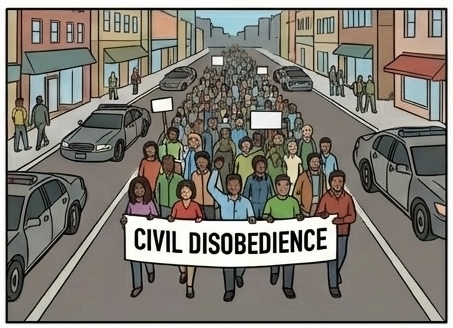
Let’s say you and your friends decide to steer your parade into city hall. People are banging drums, chanting and making speeches but so far, no one has broken anything. Police may warn you that they will start making arrests but because of the scale, this will be easier said than done. They’ll need more handcuffs. They’ll have to call in a paddy wagon. Do they even have a holding pen large enough to store 5,000 people? Someone higher up will have to make a decision. When they do, they will make an announcement over a loudspeaker three times. They will literally read you the Riot Act. If you hear this, take one last look at your date and ask yourself: “Do I really want to spend the night with this person in a holding cell?”
Usually, the party ends here. Everyone goes home, content in the knowledge that they got to have their say. But sometimes the purpose of the protest was to end up in jail. The strategic arrest may seem romantic but should not be entered into lightly. There are practical considerations such as having bail, a lawyer, or someone to walk your dog until you get out. But there are also the tactical considerations like, what will this prove? Is a courtroom the best place to have this fight? Is this the best way to change public opinion?
Sometimes the answer is yes. But always think carefully before you chain yourself to something.
Images generated by Midjourney
If you care about your
community
Recent News & Media
- All
- Detroit
- Michigan United in action
- News & Media
- Resistance
- Eastern Michigan
- Faith in Justice
- Saginaw
- Blog
- Flint
- Healthcare
- Movement Politics
- Reproductive Rights
- Statewide
- Project 3.5